- by foxnews
- 15 Apr 2026
Ancient humans were hunting and eating sharks 7,000 years ago, burial site discovery shows
Ancient people in southern Arabia hunted and ate sharks as a main food and nutrition source, new archaeological research from Oman reveals. Here are details.
1.4 k views
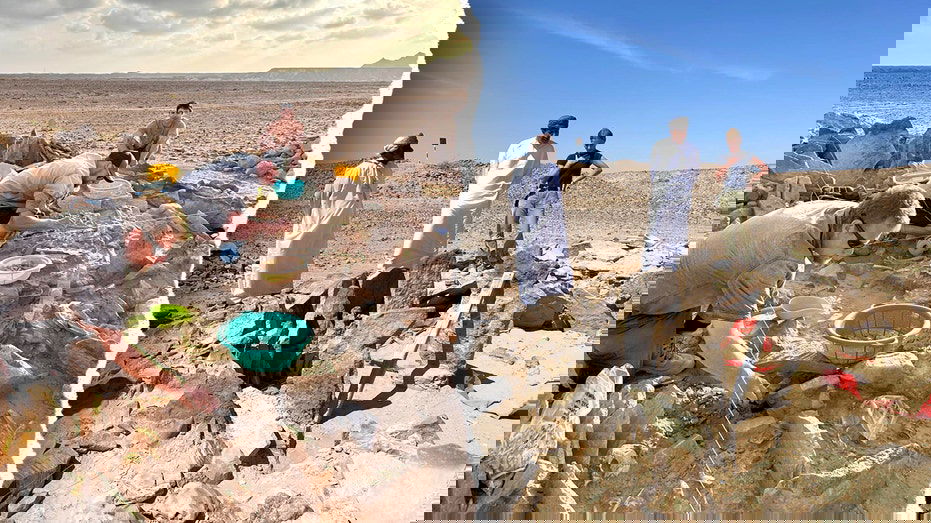
In a January news release from the Archaeological Institute of the Czech Academy of Sciences (ARUP) in Prague, officials said the megalithic tomb provides "detailed evidence to date of the diet and mobility of Neolithic communities in the region."
Archaeologists have worked at the site since 2020, navigating an arid climate that has preserved very few organic remains.
As a result, they collected tooth samples and analyzed them in the Czech Republic.
The study is the first of its kind, said Alžběta Danielisová, an archaeologist at ARUP and leader of the expedition.
"For the very first time, we were able to document specialized hunting of marine predators using natural-science data, directly through analysis of the local buried community," Danielisová said.
"The connection of this burial community with sharks is extremely interesting, and represents a new finding - not only for prehistoric Arabia, but for all Neolithic cultures in arid regions."
Fox News Digital reached out to Danielisová for comment but did not immediately hear back.
The release added that "on a global scale, the findings demonstrate how humans adapted to a wide range of environmental and climatic conditions."
"They also confirm that Wadi Nafūn functioned for more than three centuries as a central ritual site that unified different groups across the region."
you may also like




travel
- by foxnews
- descember 09, 2016
Curators at Library of Congress discover lost film by legendary cinema pioneer after spotting 'subtle clue'
The Library of Congress discovered a lost 1897 film by Georges Méliès, a legendary pioneer of special effects, featuring one of cinema's earliest robots on screen.
read more