- by foxnews
- 09 Apr 2026
'Queen of the serial killers' confessed to multiple murders after girlfriend's police betrayal
Aileen Wuornos confessed to protect her girlfriend who betrayed her to police. Explore the tragic love story behind Florida's deadliest female serial killer.
1.8 k views
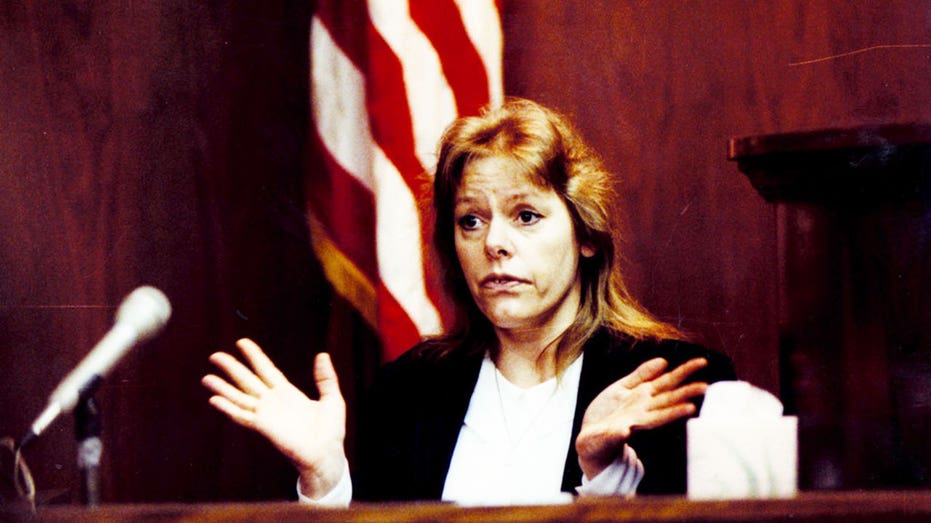
Aileen Wuornos, a Daytona Beach, Florida, prostitute convicted of killing multiple men and dubbed the "queen of the serial killers," was ready for her close-up after confessing to protect the woman she loved.
Between 1989 and 1990, the Michigan-born drifter killed seven middle-aged men along Florida's highways. A rare female serial killer, Wuornos was convicted and sentenced to death - a sentence carried out in 2002. But long before her execution, she had already stepped into the spotlight.
"I don't think she was ever really listened to by the adults in her life," Emily Turner, director of Netflix's "Aileen: Queen of the Serial Killers," told Fox News Digital.
"The first time in her life that she's getting interviews with people and being listened to and taken seriously is when she's committed these very serious murders," Turner said. "I think it's a really sad reflection of the world we live in."
At the beginning of the film, a giddy Wuornos whispers to filmmaker Jasmine Hirst, who corresponded with her for 10 years: "You guys are gonna make millions off this."
After her 1991 arrest, the case drew enormous media attention. Wuornos gave multiple interviews and made bold public statements, though at times she expressed frustration that people were exploiting her story.
"Aileen was really aware of that," Turner said. "You can see that in the interview she gives in the film - she's looking at the lights, and to a certain extent, she's enamored by the interest. For me, that's one of the many tragic parts of this story. For the first time, she gained notoriety - she was somebody, and she knew it."
THE MAKING OF A MONSTER: AILEEN WUORNOS
Giroux is also heard in the film saying Wuornos "wanted to be famous."
But before fame came love - and betrayal. In 1991, Wuornos, then 34, was arrested after a multi-state investigation. Her girlfriend, Tyria Moore, agreed to cooperate with investigators in exchange for immunity. In a recorded phone call, a frightened Moore told Wuornos she was worried police were "after me."
"I'm not gonna let you go to jail," Wuornos is heard saying before choking back tears. "Ty, I love you. If I have to confess everything just to keep you from getting in trouble, I will."
What Wuornos didn't know was that police were by Moore's side, guiding her to elicit a confession that would ultimately seal Wuornos' fate.
Wuornos met Moore in 1986, sparking a passionate four-year relationship.
"I loved her so bad," Wuornos is heard saying. "… And the only reason I carried that darn gun was I wanted to make sure that I got home alive in one piece - so I'd be another day breathing with her. But it didn't turn out that way. It got all screwed up."
Police soon linked Wuornos to a string of murders - Richard Mallory, David Spears, Charles Carskaddon, Troy Burress, Charles Humphreys and Walter Antonio - all middle-aged men found shot along remote highways.
Witnesses reported seeing two women in vehicles belonging to Wuornos' victims. Investigators later found Wuornos' fingerprints in stolen vehicles, on pawned belongings and at several crime scenes.
Moore denied any role in the murders and offered to help police clear her name.
"[I] miss her a lot," Wuornos said in the film behind bars. "I always miss her. And I'll always love her. And I'll be thinking about her the day I'm executed."
Wuornos lured men by posing as a hitchhiker or offering sex for money. She often told stories about being homeless and struggling to survive before persuading drivers to pull over in secluded areas. She shot her victims with a .22-caliber pistol, claiming self-defense after being assaulted or threatened, but she also robbed them of cash, jewelry and cars.
After her arrest, tabloids labeled her the "Hooker from Hell" and the "Damsel of Death." Her interviews captivated reporters eager to understand what could drive a woman to kill.
"What surprised me is that she's so many contradictory things at once," Turner explained. "She's charismatic, but she's a killer. She's a victim of sexual violence, but she's also a perpetrator of horrific violence."
"She's deceitful and lies, but as we captured in the film - when she stands at trial and talks about how prostitutes aren't believed and about the scale of sexual assault, she's a really searing truth-teller in that respect."
"She defies definition," Turner added.
"What would people be shocked to learn? I think anyone with even a small understanding of her story knows she had an awful childhood," Turner said.
"The things she tells Jasmine are shocking. She has a kind of humanity there - and for me, that's the more disturbing truth. It's easier to say she was just bad, but I think she was the product of a horrific childhood and repeated sexual assaults throughout her life. Then again, many people who endure such trauma don't go on to commit such terrible acts."
By the end, Wuornos wanted to die. She became paranoid, convinced forces were conspiring against her. When asked for her final words, she declared: "I'm sailing with the rock, and I'll be back - like 'Independence Day' with Jesus … on the big mothership and all. I'll be back."
"When I first saw Jasmine's interview, it took a while to understand what we were watching," said Turner. "[Aileen] is so contradictory. She goes from [discussing] the childhood trauma she suffered, and then there's a gleeful element where she's talking about the victims. It's really jarring that she's talking about murdering people in this way."
"I'm very clear that what she did was awful," Turner said. "... [But] it felt like her story is almost this kind of Trojan horse - it has so much else to say about the world ... how her portrayal in the media was so different. ... I think her story has so many more lessons for all of us."
you may also like


travel
- by foxnews
- descember 09, 2016
Popular cruise line selling tree house suite for jaw-dropping price: 'Rather buy a house'
Royal Caribbean's new "Ultimate Family Treehouse" suite on Hero of the Seas costs over $200,000 a week - sparking spirited debate among cruise fans online.
read more